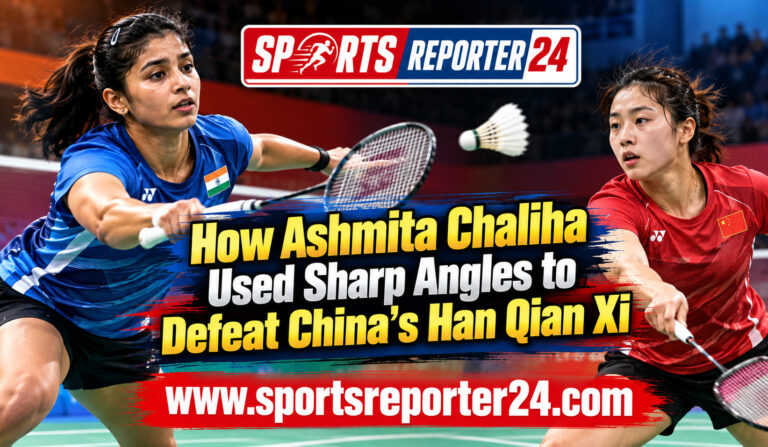
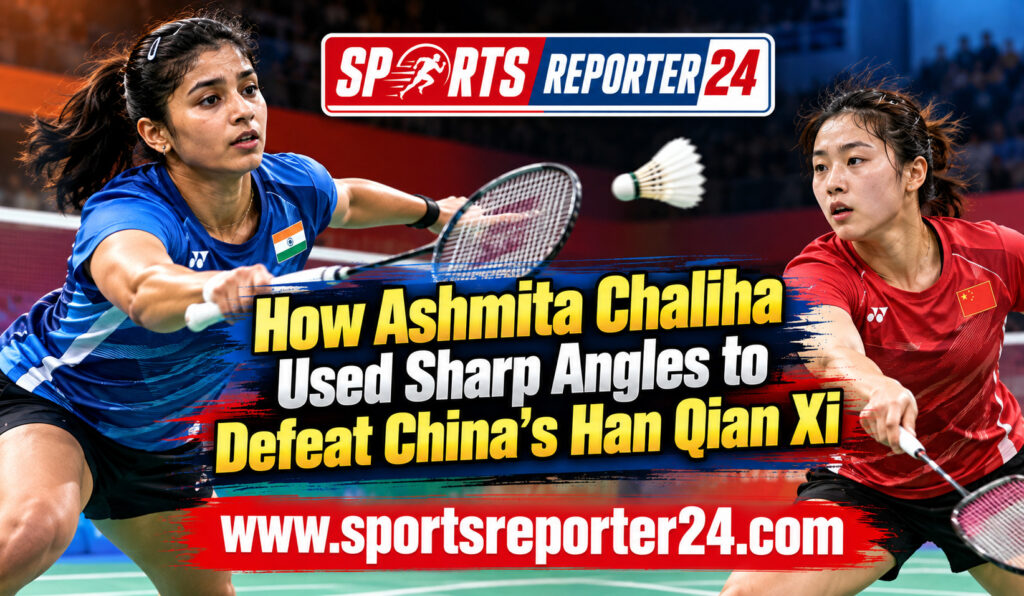
Indian badminton player Ashmita Chaliha has delivered another impressive performance on the international stage, defeating China’s Han Qian Xi at the French Open with a combination of aggressive attacking shots, sharp angles and improved consistency. The Indian shuttler won 21-18, 24-22, showing both her attacking ability and her growing confidence against highly ranked opponents.
The victory is significant because Chaliha has been working to turn her natural attacking talent into a more consistent weapon. Her left-handed playing style allows her to create unusual angles, while her powerful smashes and accurate shots can force opponents away from their preferred positions.
The match also demonstrated her mental strength. After taking the first game, Chaliha fell behind significantly in the second but refused to surrender control. She recovered through patient defence, confident attacking and better shot selection to close out the match in straight games.
Ashmita Chaliha’s Victory Over Han Qian Xi
The French Open match was an important test for Chaliha, who faced a Chinese opponent known for her ability to stay in rallies and apply pressure through consistent badminton. Han Qian Xi presented a difficult challenge, but the Indian player used her strengths effectively.
Chaliha won the opening game 21-18. The contest became much tighter in the second game, when Han looked capable of taking the match into a deciding game. Chaliha, however, produced a determined comeback and secured the second game 24-22.
The result reflected more than raw power. Chaliha combined attacking intent with improved defensive work, using different parts of the court to make Han move repeatedly. By mixing smashes, clears and drops, she prevented her opponent from settling into a comfortable rhythm.
Her victory followed an encouraging period in which she had also defeated Han in the final of the Korea Masters in August 2026. That earlier win gave Chaliha a valuable title and showed that she could compete successfully against a strong international opponent.
How Sharp Angles Became Chaliha’s Biggest Weapon
Badminton is a sport of speed, positioning and split-second decisions. A powerful smash can win a point, but an accurate shot that forces an opponent to move away from the centre of the court can be equally effective.
Chaliha’s left-handed style is an important part of her attacking game. Many opponents train regularly against right-handed players, so the direction and angle of a left-hander’s shots can create different challenges. Chaliha uses this advantage to direct the shuttle into difficult areas and open up space for her next attack.
Her approach combines several key elements:
- Cross-court angles: These shots force the opponent to cover more ground and can create open space elsewhere.
- Down-the-line smashes: Powerful straight attacks reduce the opponent’s reaction time when placed accurately.
- Deep clears: Shots toward the back of the court push the opponent away from the net and create opportunities to attack.
- Quick drops: Shorter shots disrupt the rhythm of deep rallies and force sudden forward movement.
The effectiveness of these tactics depends on timing and placement. Chaliha’s goal is not simply to hit the shuttle hard but to make Han respond from uncomfortable positions, increasing the chances of a weak return or a clean winner.
The Importance of Chaliha’s Left-Handed Playing Style
Chaliha’s left-handed game gives her a natural tactical advantage, particularly when she can create attacking opportunities from the back of the court. Her round-the-head forehand shots allow her to attack from positions where another player might choose a defensive clear.
She can also use her backhand to keep rallies alive and change the direction of play. When she retrieves a difficult shuttle from the back corner, she can follow with a straight clear, a fast drop or an attacking shot. This variety makes it harder for opponents to predict her next move.
Another important feature is her ability to hit the shuttle at speed while maintaining control. Fast attacking shots can reduce the time available for an opponent to prepare, while sharp placement can force movement across the court.
Against Han, these qualities helped Chaliha take charge of rallies. Instead of allowing the Chinese player to control exchanges through consistency, she repeatedly looked for chances to attack.
The Second-Game Comeback That Changed the Match
The second game provided the biggest test of Chaliha’s temperament. After winning the first game, she fell behind 7-14 and faced the possibility of losing her advantage.
At that stage, a player can become impatient and attempt to finish rallies too quickly. Chaliha instead continued to trust her attacking game while working harder to stay in exchanges. She gradually reduced the deficit and moved back into contention.
Her comeback demonstrated three important qualities:
- Patience under pressure: She continued fighting instead of allowing the scoreline to dictate her decisions.
- Better shot selection: She looked for opportunities to attack rather than forcing winners from every position.
- Mental resilience: She remained committed even when Han appeared to have control of the game.
Chaliha eventually brought the score level at 19-19. The game then became a tense contest in which every point mattered. Despite the pressure, she found a way to win 24-22 and finish the match without needing a third game.
This ability to recover from a difficult position is especially important at the highest level of badminton. Technical skill can create opportunities, but mental strength often determines whether a player can use them when the match is on the line.
How Better Defence Supports Her Attacking Game
Chaliha’s attacking talent has been evident for some time, but consistency has been an important area of development. A player who attacks frequently must also defend effectively because opponents will try to turn the pressure around.
Her training under coach Park Tae Sang has focused on strengthening this part of her game while maintaining her natural attacking strengths. Multi-shuttle drills help improve movement, reactions and the ability to recover from difficult positions.
Better defence gives Chaliha more opportunities to attack. When she returns a difficult smash or retrieves a shuttle close to the floor, she can keep the rally alive and wait for a weaker response. She can then change the pace and direction of the exchange.
This balance is important against players who rely on long rallies. If Chaliha attacks too early, she risks making unforced errors. If she waits too long, she may allow her opponent to take control. Learning when to defend and when to attack can make her a more complete competitor.
Ashmita Chaliha’s Journey Back to Form
Chaliha’s recent progress is particularly encouraging because her career has included a serious injury setback. She suffered a right-knee meniscus tear during the Korea Open in 2024 and needed surgery and rehabilitation before returning to competition.
Recovering from a major injury requires physical preparation as well as confidence. Athletes must rebuild strength, regain movement and trust their bodies during demanding matches. Returning to the international circuit also means facing opponents who have continued developing while the injured player is away.
Chaliha’s 2026 results suggest that her hard work is producing progress. Her maiden BWF World Tour title at the Korea Masters in August was an important milestone. Defeating Han in the final after losing the opening game demonstrated her ability to adjust during a match.
Her French Open victory adds another positive result and reinforces the value of consistent preparation. Rather than relying entirely on natural attacking ability, she is learning to combine power, patience and tactical awareness.
What the Victory Means for Indian Badminton
Chaliha’s performance is encouraging for Indian women’s singles badminton. Indian players have shown that they can challenge leading international opponents, but sustained results on the World Tour remain essential for improving rankings and gaining access to the biggest tournaments.
Chaliha has been working toward breaking into the world’s top 32. A stronger ranking can improve access to higher-level events, where players face elite opponents and gain valuable experience.
Her progress also offers a useful example for younger players. Natural talent matters, but long-term success depends on improving weaknesses, managing pressure and adapting tactics to different opponents.
The next challenge will be to maintain this level against other top-ranked players. Strong performances across several tournaments would demonstrate that her recent victories are part of a sustained improvement rather than isolated successes.
The Road Ahead for Ashmita Chaliha
Chaliha’s immediate focus will be on continuing her progress through the international badminton circuit. Every tournament offers opportunities to improve her ranking, build confidence and learn how to handle different playing styles.
Her attacking game gives her a clear identity. The next stage is to make that strength dependable across matches, particularly when opponents defend well or target her movement. Improved consistency, stronger defence and careful shot selection will remain important.
The longer-term goal is to compete for a place at the Los Angeles 2028 Olympic Games. Qualification is expected to begin in May 2027, so performances during the coming season could play an important role in her campaign.
Chaliha’s win over Han Qian Xi showed what she can achieve when her attacking instincts are supported by patience and composure. If she continues developing these qualities, she will have more opportunities to challenge established names and strengthen India’s presence in international women’s singles badminton.
Frequently Asked Questions
1. What was the score when Ashmita Chaliha defeated Han Qian Xi at the French Open?
Ashmita Chaliha won 21-18, 24-22 in straight games.
2. How did sharp angles help Chaliha win?
Her cross-court shots, straight smashes and varied placement forced Han to cover more of the court, creating openings for attacking winners.
3. Why is Chaliha’s left-handed style important?
Her left-handed shots create different angles and directions that can make it more difficult for opponents to predict and defend her attacks.
4. Has Ashmita Chaliha defeated Han Qian Xi before?
Yes. Chaliha previously defeated Han in the women’s singles final at the Korea Masters in August 2026 to win her first BWF World Tour title.
5. What is Ashmita Chaliha’s long-term goal?
One of her major ambitions is to compete for a place at the Los Angeles 2028 Olympic Games, with qualification expected to begin in May 2027.