Indian badminton has produced several remarkable athletes, but few have had an impact as significant as PV Sindhu.
From entering the sport as a young girl to becoming an Olympic medallist and world champion, Sindhu has built a career defined by determination, discipline and an ability to perform under enormous pressure.
Her journey is not simply a story about winning medals. It is also about the years of training, difficult defeats, comebacks and expectations that came with becoming one of India’s biggest sporting icons.
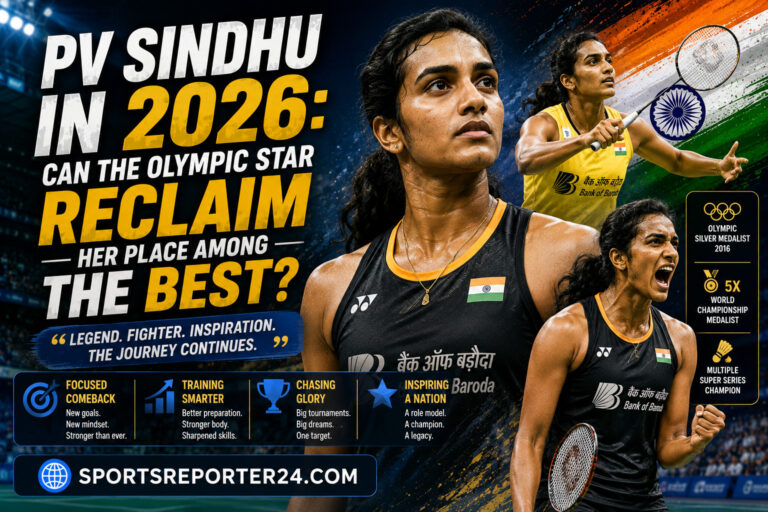
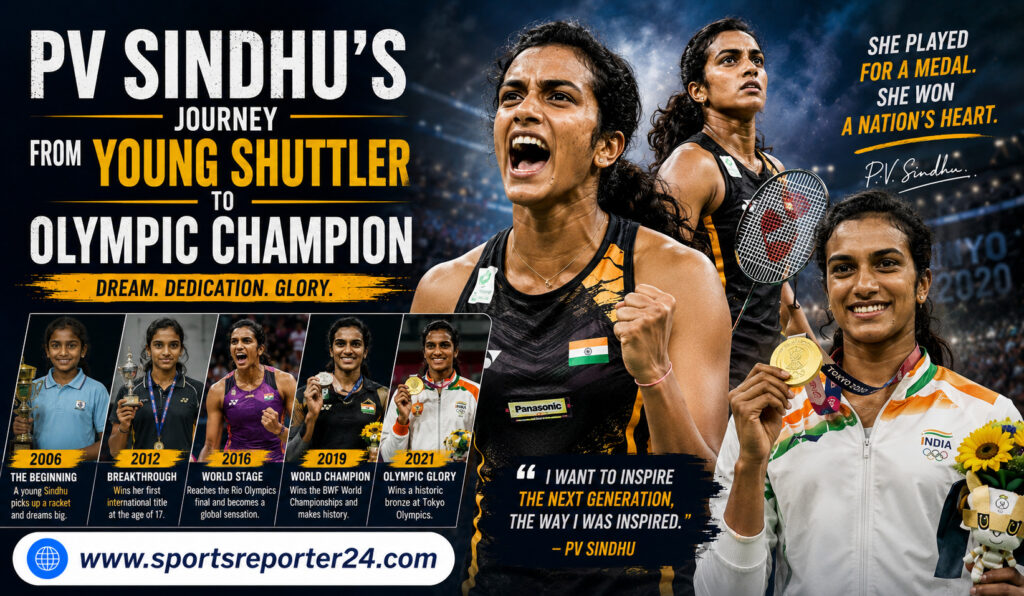
Sindhu became a household name after winning silver at the Rio 2016 Olympics. Four years later, she added another Olympic medal by winning bronze at Tokyo 2020. She also created history in 2019 by becoming the first Indian badminton player to win a World Championships singles gold medal.
Her achievements have helped change the way Indian fans view badminton.
But the road to those historic moments started much earlier.
The Early Years of PV Sindhu
Pusarla Venkata Sindhu was born in Hyderabad in 1995 and grew up in a sporting family.
Both of her parents had connections with volleyball, but Sindhu eventually chose badminton as her sport.
As a young player, she began training seriously and gradually developed the physical strength and competitive mentality required for elite badminton.
Her commitment became visible at an early age.
Training was not simply an after-school activity for Sindhu. It became a major part of her daily life.
Long hours on the court, physical conditioning and repeated practice helped build the foundation for her professional career.
Her development also benefited from India’s growing badminton infrastructure and the guidance of experienced coaches.
Training Helped Shape Her Career
One of the defining characteristics of Sindhu’s career has been her willingness to work extremely hard.
Badminton is a physically demanding sport.
Players need speed, endurance, coordination, strength and the ability to make decisions within fractions of a second.
For a young athlete hoping to reach the international level, natural talent alone is not enough.
Sindhu’s training helped her develop a powerful style of play.
Her height also became an advantage, particularly in attacking situations and at the net.
But her greatest strength was arguably her mentality.
She learned to compete against players with more international experience and gradually became comfortable playing on major stages.
Breaking Into International Badminton
Sindhu began attracting international attention as a teenager.
Her performances at junior and senior events showed that she was capable of competing beyond India’s domestic circuit.
The transition from junior badminton to the senior level is difficult because the speed, physicality and tactical quality increase dramatically.
Sindhu managed that transition successfully.
Her results began improving, and she started defeating higher-ranked opponents.
This period was important because it established her as more than a promising youngster.
She was becoming a serious international contender.
The Rio 2016 Olympics Changed Everything
The biggest breakthrough of Sindhu’s early career came at the 2016 Rio Olympics.
She entered the tournament as a young player but produced a remarkable run.
Sindhu reached the women’s singles final after defeating several strong opponents.
In the gold-medal match, she faced Spain’s Carolina Marin.
Sindhu eventually lost the final but won the silver medal, becoming the first Indian woman to win an Olympic silver medal. BWF records her Rio achievement as the beginning of her Olympic medal legacy.
The result transformed her public profile.
Before Rio, Sindhu was known mainly among badminton followers.
After Rio, she became one of India’s most recognisable athletes.
Millions of people who had rarely followed badminton began watching her matches.
Her success also inspired young players across the country to take the sport more seriously.
The Pressure After Olympic Success
Winning an Olympic medal can change an athlete’s career, but it also creates new pressure.
Every tournament after Rio was viewed through the expectations created by her Olympic success.
Fans wanted more medals.
The media followed every result.
Opponents also understood that Sindhu was no longer an emerging player.
She was now one of the athletes they needed to prepare specifically for.
Managing those expectations became another challenge.
Sindhu experienced victories as well as disappointing defeats.
But her ability to continue competing at the highest level became one of the most important aspects of her career.
The 2019 World Championship Triumph
One of the greatest moments of Sindhu’s career came at the 2019 BWF World Championships.
She had already won silver and bronze medals at previous editions of the tournament.
But she had not yet won the title.
In Basel, Switzerland, she finally completed the journey.
Sindhu defeated Japan’s Nozomi Okuhara in the final to become world champion. BWF’s official World Championships record describes it as the moment Sindhu finally claimed gold after previously winning two bronze and two silver medals at the event.
The victory was significant for Indian badminton.
Sindhu became the first Indian to win a World Championships singles gold medal.
It also showed that her success was not limited to the Olympics.
She had established herself as a genuine world-class badminton player.
Tokyo 2020 Brought Another Olympic Medal
The Tokyo Olympics presented Sindhu with another major challenge.
She was no longer the young player who had surprised the world in Rio.
She was now one of the tournament favourites.
The pressure was therefore completely different.
Sindhu reached the bronze-medal match after losing in the semifinals.
Instead of allowing disappointment to affect her performance, she responded strongly and defeated China’s He Bingjiao to win bronze.
With that result, she became the first Indian woman to win two individual Olympic medals. BWF continues to identify her as a two-time Olympic medallist following her Rio silver and Tokyo bronze.
That achievement placed her among India’s most successful Olympic athletes.
Why Sindhu’s Playing Style Stands Out
Sindhu’s game has traditionally been built around power and attacking badminton.
Her height gives her an advantage when generating steep smashes, while her reach allows her to cover significant areas of the court.
She has also developed her defensive game and tactical awareness over the years.
One of the most important changes in her career has been her ability to adapt.
Modern women’s badminton has become increasingly fast and physically demanding.
Opponents constantly analyse weaknesses and develop strategies to challenge established stars.
Sindhu has therefore had to keep improving instead of relying only on the strengths that made her successful as a teenager.
Difficult Periods Made Her Stronger
Every long sporting career includes difficult phases.
Sindhu has experienced injuries, early tournament exits and periods where her form did not match expectations.
These moments are often overlooked when people look at an athlete’s medal collection.
But setbacks can play an important role in development.
A player learns how opponents are adapting.
Coaches identify technical weaknesses.
Physical preparation changes.
Mental resilience becomes stronger.
For Sindhu, these challenges have been part of a career that has lasted far beyond her initial breakthrough.
Sindhu’s Influence on Indian Badminton
Sindhu’s impact extends beyond her personal achievements.
Her success has helped increase the visibility of women’s badminton in India.
Young girls have been able to see an Indian woman competing for Olympic and World Championship medals.
That matters.
Representation can influence whether young athletes believe that an international sporting career is possible.
Sindhu has also become an important ambassador for Indian sport.
Her profile extends beyond badminton tournaments, with brand partnerships and public appearances making her one of India’s most recognisable athletes.
Inspiring the Next Generation
One of the clearest signs of Sindhu’s influence is the emergence of younger Indian badminton players.
India now has a broader group of athletes competing internationally.
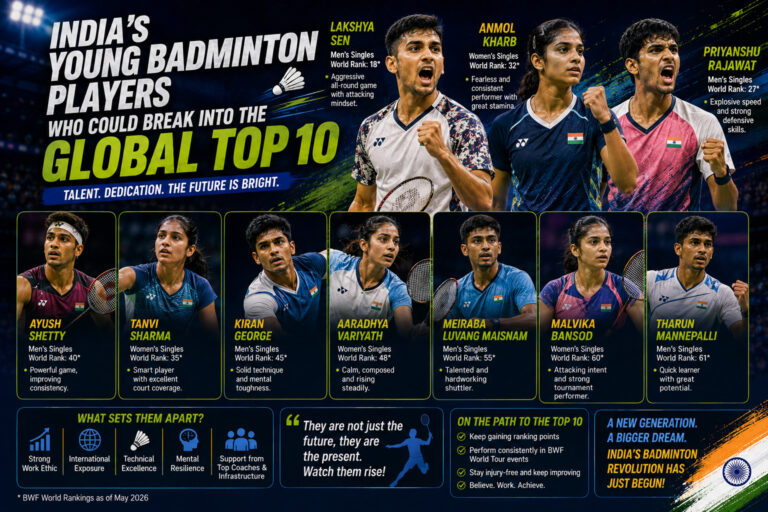
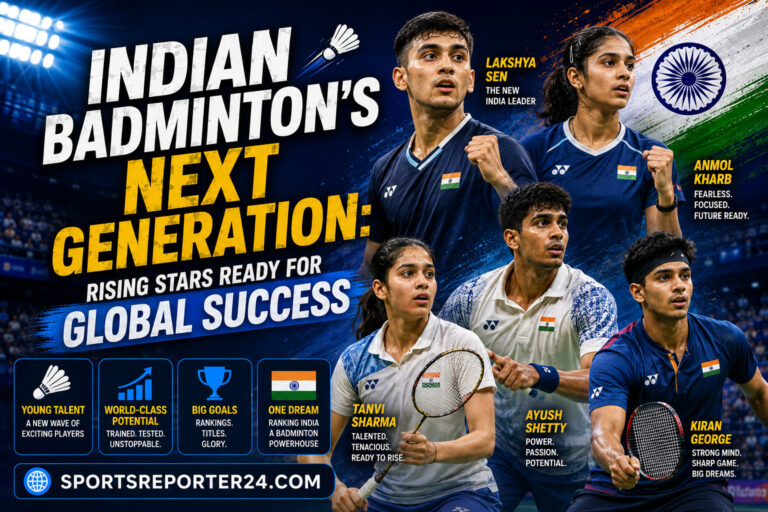
Players such as Lakshya Sen, Satwiksairaj Rankireddy, Chirag Shetty and a new generation of young shuttlers are helping expand India’s presence across different events.
The success of Sindhu and earlier stars such as Saina Nehwal created a pathway for these athletes.
Young players now grow up seeing badminton as a realistic professional career rather than simply a recreational sport.
The Importance of Her Longevity
Winning one major tournament can make an athlete famous.
Remaining competitive for many years is much harder.
Sindhu’s longevity is one of the most impressive aspects of her career.
She has competed across multiple Olympic cycles and continued appearing at major international tournaments.
Her career has therefore extended beyond one golden moment.
Rio made her famous.
Tokyo confirmed her Olympic consistency.
The 2019 World Championship established her as a world champion.
Together, these achievements created a legacy that goes far beyond any single tournament.
Sindhu’s Journey Is About More Than Medals
It would be easy to describe Sindhu’s career simply through statistics.
Olympic silver.
Olympic bronze.
World Championship gold.
But the deeper story is about what happened between those achievements.
There were early mornings, long training sessions, difficult losses and constant expectations.
There were moments when she had to rebuild confidence.
There were opponents who studied her game and tried to exploit weaknesses.
There were periods when injuries and fitness became challenges.
That is what makes her journey relatable.
Success at the highest level rarely happens in one dramatic moment.
It is built over thousands of ordinary days.
What Her Legacy Means for Indian Sport
PV Sindhu has helped redefine what Indian badminton can achieve.
Before her Olympic breakthrough, India had already produced talented badminton players.
But Sindhu’s sustained success demonstrated that an Indian woman could remain among the world’s elite for years.
Her achievements have helped raise expectations.
Indian fans now expect badminton players to challenge for medals at the Olympics and World Championships.
That expectation itself is part of her legacy.
The Road Ahead
Sindhu’s career is now in a different phase from the one that began with her Olympic breakthrough.
She has already achieved the milestones that many athletes spend their entire careers chasing.
But elite athletes often continue competing because the motivation goes beyond medals.
There is the desire to improve.
There is the challenge of competing against a new generation.
And there is the opportunity to continue representing India at the highest level.
Her experience can also become valuable to younger players who are entering international badminton.
Conclusion
PV Sindhu’s journey from a young badminton player to an Olympic champion and world champion is one of the defining stories of modern Indian sport.
Her rise was built on talent, but talent alone did not create her career.
Years of disciplined training helped her reach the international stage. The silver medal at Rio 2016 transformed her into a national sporting icon, while the bronze at Tokyo 2020 made her a two-time Olympic medallist. In between those Olympic achievements, her 2019 World Championship victory gave India one of its most historic badminton moments.
Her career has also demonstrated the importance of resilience.
There were victories, defeats, injuries, expectations and difficult periods.
Yet she continued to return to the court.
That consistency is perhaps the biggest lesson from her story.
PV Sindhu did not simply win medals for India.
She helped create a new generation of Indian badminton fans and players.
Her legacy will ultimately be measured not only by the trophies she collected, but also by the athletes who picked up a racket because they believed they could follow her path.
From a young shuttler with ambition to an Olympic medallist and world champion, PV Sindhu’s journey has become an important chapter in India’s sporting history.